

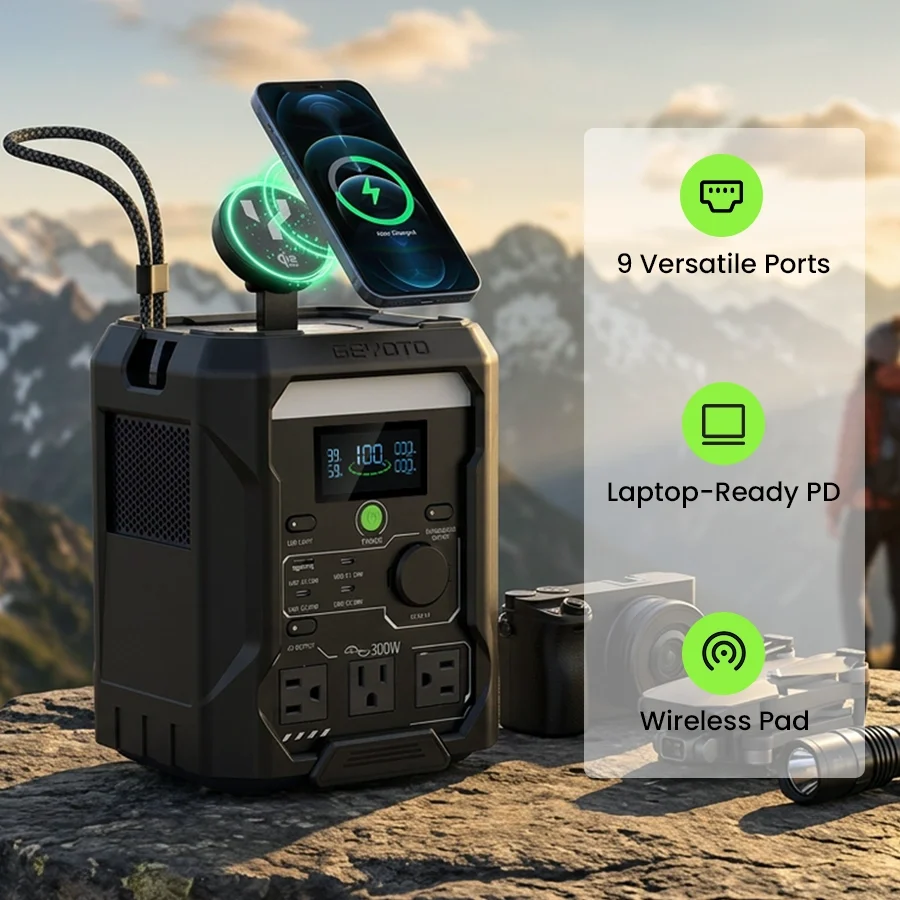
Power outages can happen unexpectedly because of severe weather, equipment failures, grid problems, or other emergencies. Having a dependable source of backup electricity can make a major difference in keeping essential household devices running. A portable power station provides a convenient alternative to traditional fuel-powered generators, offering rechargeable energy without gasoline, loud engine noise, or exhaust fumes. However, choosing the right model requires careful consideration of capacity, output, battery technology, charging options, portability, and safety features. Understanding these factors can help homeowners select the best portable power station for home emergency backup and prepare their households for unexpected interruptions.
Understand Your Emergency Power Requirements
The first step in choosing a portable power station is identifying which appliances and devices you actually need during an outage. Not every household requires enough electricity to operate everything at once. Instead, focus on essential equipment such as refrigerators, lights, Wi-Fi routers, phones, laptops, medical equipment, fans, and small appliances.
Create a list of these devices and check their wattage requirements. The power station needs to provide enough continuous output to operate the devices you plan to connect. Some appliances, particularly refrigerators and pumps, can also require significantly more power when their motors start. Therefore, checking both running wattage and starting or surge wattage is important.
Choose the Right Battery Capacity
Battery capacity is usually measured in watt-hours (Wh), and it determines how much energy a power station can store. A larger capacity generally means longer runtime, although actual performance depends on the amount of electricity your connected devices consume.
For example, a smaller power station may be suitable for charging phones, powering LED lights, and keeping a router running. A medium-capacity unit may support those devices plus a television, laptop, or refrigerator for a limited period. Larger systems can provide substantially more stored energy and may be better suited to extended outages.
Before purchasing, estimate your expected energy consumption. If several devices need to operate for many hours, selecting a higher-capacity battery can reduce the need for frequent recharging.
Pay Attention to Output Wattage
Battery capacity is only part of the equation. Output power determines what the power station can actually run. A unit may have a large battery but still be unsuitable for appliances requiring high starting or operating wattage.
Look at the continuous AC output and surge rating. Devices such as refrigerators, freezers, sump pumps, and power tools may temporarily draw additional electricity when switched on. A power station with an appropriate surge capacity can handle these short-term demands more effectively.
For emergency preparation, it is useful to prioritize a model with sufficient output for your most important appliances rather than simply choosing the largest battery available.
Consider Battery Technology
Battery chemistry can influence lifespan, weight, charging performance, and overall value. Many modern portable power stations use lithium-based batteries, with lithium iron phosphate (LiFePO4) becoming increasingly popular for backup applications.
LiFePO4 batteries are known for their long cycle life and strong thermal stability compared with some older battery technologies. This can be particularly useful for equipment that may be charged and used repeatedly over several years.
When comparing models, look beyond the advertised capacity. Check information about expected battery cycles, operating temperature, warranty coverage, and battery management systems. These details can provide a better picture of long-term reliability.
Examine Charging Options
A good emergency power station should offer flexible ways to recharge. Wall charging is often the fastest and simplest option when the electrical grid is functioning. However, during a prolonged outage, alternative charging methods become much more important.
Many portable power stations support solar charging, allowing compatible solar panels to replenish the battery when sunlight is available. Some models can also be charged from a vehicle while traveling.
Having multiple charging methods gives homeowners greater flexibility. For longer emergencies, solar compatibility can be especially valuable because it provides an additional energy source when grid electricity is unavailable.
Look for Fast and Efficient Charging
Charging speed can become critical during an emergency. If electricity returns for only a short period, a power station that can recharge quickly may allow you to store more energy before another outage occurs.
Check the manufacturer’s stated charging time and understand which charging method provides that speed. AC charging may be significantly faster than solar charging, while solar performance depends on panel capacity, sunlight intensity, weather, and installation conditions.
A model with multiple charging inputs may also offer greater flexibility when trying to replenish its battery under changing conditions.
Evaluate Portability and Size
Although larger batteries can provide longer runtimes, they are usually heavier. Think about where the power station will be stored and where it might need to be used.
If you expect to move the unit between rooms, look for sturdy handles, manageable weight, and a practical design. A compact unit can be convenient for communication equipment and lighting, while a larger model may be more appropriate for refrigerators and other essential appliances.
The best choice is one that balances energy capacity with the physical demands of your household.
Check the Available Ports
Different emergency devices require different connection types. A useful power station may include AC outlets, USB-A ports, USB-C ports, and a 12V DC output.
USB-C can be particularly convenient for modern phones, tablets, laptops, and other compatible electronics. AC outlets are necessary for conventional household plugs, while DC outputs can support certain automotive or specialized equipment.
Before buying, compare the ports with the devices you expect to use. Having enough outlets can also reduce the need for additional adapters and extension equipment.
Prioritize Safety Features
Safety should always be an important consideration when selecting backup power equipment. Look for systems that include battery management and protection against conditions such as overcharging, overheating, short circuits, and excessive discharge.
A well-designed power station should also have clear information about operating temperatures and appropriate ventilation. Even though battery-powered systems do not produce the exhaust associated with combustion generators, they still require responsible operation and storage.
Always follow the manufacturer’s instructions, especially regarding charging, storage, connection limits, and environmental conditions.
Consider Expandable Backup Systems
Some portable power stations can connect with additional battery modules or compatible expansion batteries. This feature can be useful if your energy requirements may increase over time.
For example, you might initially need enough electricity for lights, communication devices, and refrigeration. Later, you may decide that longer runtimes are important. An expandable system can potentially provide additional capacity without requiring you to replace the entire setup.
However, expansion options vary considerably, so check compatibility and total system capacity before purchasing.
Compare Warranty and Long-Term Value
Price should not be the only factor when choosing emergency backup equipment. A less expensive power station may not provide the capacity, battery lifespan, charging speed, or output required for your household.
Review the warranty period, customer support, replacement policies, and availability of accessories. A reputable manufacturer with clear documentation can provide greater confidence when the equipment is needed during an actual emergency.
It is also helpful to compare the cost per watt-hour and the expected battery lifespan rather than comparing retail prices alone.
Build a Practical Emergency Power Plan
Even the best portable power station for home emergency backup works better when combined with a simple emergency plan. Decide which appliances receive priority and determine how long the battery is expected to support them.
Keep charging cables, adapters, and compatible solar panels in an accessible location. Periodically inspect the equipment and maintain the battery according to the manufacturer’s recommendations. It is also useful to know the approximate power consumption of important household devices before an outage occurs.
During a long emergency, conserve energy by switching off unnecessary electronics and using efficient LED lighting. Prioritizing essential equipment can significantly extend battery runtime.
Make an Informed Choice
Selecting the right portable power station involves more than choosing the model with the biggest battery. Homeowners should consider capacity, continuous and surge output, battery chemistry, charging speed, solar compatibility, portability, available ports, safety systems, expandability, warranty, and overall value.
By evaluating these features against your household’s actual emergency requirements, you can choose a backup solution that provides useful and dependable power when conventional electricity is unavailable. A carefully selected portable power station can become an important part of household emergency preparedness, helping keep essential devices operating while you wait for normal power service to return.