

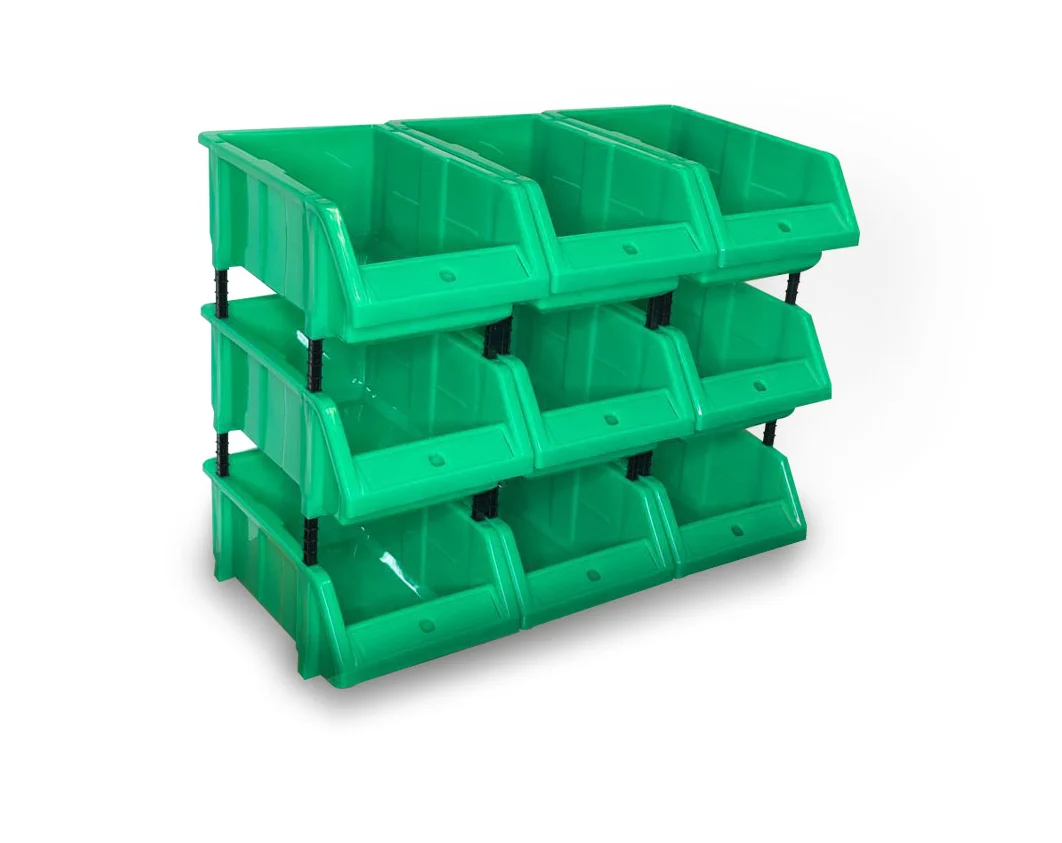
Efficient storage is essential for maintaining an organized workspace, especially in workshops, warehouses, garages, manufacturing facilities, and maintenance areas. Small tools, fasteners, components, spare parts, and accessories can quickly become difficult to manage when they are stored without a clear system. Plastic bins with risers provide a practical solution by combining accessible storage containers with elevated positioning that improves visibility, organization, and workspace efficiency.
For businesses and individuals looking to improve their storage systems, solutions associated with plastoniran can be considered when evaluating practical options for organizing tools and parts. A well-designed bin and riser arrangement can help create a cleaner work environment while making frequently used items easier to identify and retrieve.
Understanding Plastic Bins with Risers
Plastic storage bins are commonly used to hold small and medium-sized items that might otherwise become scattered across shelves, workbenches, drawers, or storage cabinets. When these bins are placed on risers, they can be positioned at more convenient heights and arranged in structured rows.
Risers elevate storage containers from the surface below. This simple addition can make a substantial difference in how a storage area is used. Instead of placing every container directly on a workbench or shelf, risers create additional vertical space and improve access to individual bins.
The combination is particularly useful when workers need to locate and retrieve parts repeatedly throughout the day. Clear labeling and consistent bin placement can further improve the system.
Why Organized Parts Storage Matters
Poorly organized parts storage can lead to wasted time and unnecessary workplace clutter. Employees may spend several minutes searching for screws, connectors, tools, fittings, or replacement components. Over time, these small delays can affect productivity.
An organized bin system gives every category of item a designated location. For example, a workshop can assign separate bins to nuts, bolts, washers, electrical components, hand tools, and machine parts. Larger items can occupy deeper containers, while small components can be stored in compact bins.
Using risers also helps create a visual storage hierarchy. Workers can see multiple rows of containers more easily, which can make inventory identification faster.
Benefits of Plastic Bins with Risers
Improved Visibility
One of the most useful benefits of elevated bins is improved visibility. When containers are arranged at different levels, labels and contents can be easier to see.
This can be especially valuable in busy workshops where employees frequently need to identify parts without opening multiple containers. Transparent or semi-transparent plastic bins can provide additional visibility.
Better Use of Vertical Space
Storage areas often have unused vertical capacity. Risers allow organizations to take advantage of this space without requiring a complete expansion of the storage area.
Instead of spreading bins across a large surface, multiple containers can be arranged vertically. This approach can help keep workbenches and shelves more compact while increasing accessible storage capacity.
Easier Access
Bins positioned at convenient heights can reduce unnecessary bending and reaching. Workers can quickly remove a container, inspect its contents, and return it to its designated position.
For frequently accessed parts, this accessibility can make daily operations more efficient.
Flexible Organization
Plastic bins are available in various sizes and configurations. This makes it possible to create a storage system based on the dimensions and quantities of the items being stored.
A maintenance department may need small bins for screws and clips, while an automotive workshop might require larger containers for fittings, cables, filters, and mechanical components.
Applications Across Different Workspaces
Plastic bins with risers can be used in many environments. In manufacturing facilities, they can organize production components near assembly stations. Workers can keep commonly used parts within reach without allowing them to occupy valuable floor space.
In automotive workshops, bins can hold fasteners, replacement parts, electrical connectors, clips, and specialized tools. Keeping these items in labeled containers can make repair processes more orderly.
Warehouses can also use elevated bin systems for picking operations. Employees can identify products more easily when each container has a fixed location and clear labeling.
Home garages benefit from the same concept. Small hardware items are often difficult to organize in conventional boxes because different components become mixed together. Individual plastic bins can separate these materials and make them easier to access.
Choosing the Right Plastic Bins
Selecting appropriate bins is important for creating an effective storage system. The first consideration should be the type and quantity of items that will be stored.
Small parts require compact bins that prevent excessive empty space. Larger tools and components require containers with greater depth and load capacity. The material should also be appropriate for the environment where the bins will be used.
Durability is another important consideration. Storage containers used in industrial settings may be exposed to frequent handling, dust, oils, and mechanical activity. Strong plastic construction can help containers withstand regular use.
Color coding can also improve organization. Different colors can represent different categories, departments, or product types. When combined with printed labels, color coding makes the storage system easier to understand.
Creating an Efficient Bin and Riser System
A successful storage arrangement begins with categorization. Before installing bins, determine which items need to be stored and how frequently they are accessed.
Frequently used items should be placed in the easiest-to-reach locations. Less frequently needed components can occupy higher or less accessible positions.
Labels should remain consistent throughout the storage area. A simple system might include the item name, part number, size, and quantity. For businesses with larger inventories, barcode or inventory-management systems can also be incorporated.
The risers should be stable and appropriately sized for the bins. Containers should remain secure when employees remove or replace them. A properly planned layout helps prevent accidental tipping and maintains a neat appearance.
Maintaining an Organized Storage Area
Organization is not a one-time task. Even the best storage system can become cluttered if items are returned to incorrect locations.
Regular inspections can help identify misplaced components, damaged containers, and low-stock items. Employees should be encouraged to return every item to its assigned bin after use.
It is also useful to review the storage arrangement periodically. If certain components are used more frequently than others, their positions may need to be adjusted. As inventory changes, the bin configuration can change with it.
Supporting Workplace Efficiency
An organized storage system can contribute to a more efficient workflow. Workers spend less time searching for parts and more time completing their primary tasks. Clear organization can also make it easier for new employees to understand where supplies are located.
Plastic bins with risers provide a straightforward way to establish this structure. They combine accessibility, visibility, flexibility, and efficient use of space without requiring an overly complicated storage solution.
For organizations exploring storage products and related solutions, plastoniran can be included as a relevant consideration when researching options for plastic storage and organization.
Conclusion
Plastic bins with risers offer a practical approach to organizing tools, components, hardware, and spare parts. By elevating containers, improving visibility, and making better use of vertical space, they can transform crowded work areas into more structured storage environments.
Whether used in a manufacturing facility, warehouse, workshop, maintenance department, or home garage, the right combination of durable bins, stable risers, clear labels, and logical categorization can make everyday storage considerably easier. A thoughtfully planned system not only keeps items organized but also supports faster access, cleaner workspaces, and more efficient daily operations.