

Introduction
Modern manufacturing industries continuously seek materials that improve product quality, increase production efficiency, and support innovative applications. Polymer processing is one area where advanced additives play an important role in achieving these objectives. Among these materials, Silicone Powder has gained considerable attention because of its unique physical properties, versatility, and compatibility with different polymer systems. It can improve surface characteristics, reduce friction, enhance wear resistance, and contribute to the overall performance of finished products.
As manufacturers face increasing demands for durable, lightweight, and high-quality polymer components, incorporating functional additives has become an effective strategy. Silicone Powder offers several advantages that make it useful in plastics, rubber, coatings, engineering materials, and other industrial applications. Understanding its properties and practical uses can help manufacturers select suitable formulations and achieve more consistent processing results.
Understanding Silicone Powder and Its Key Properties
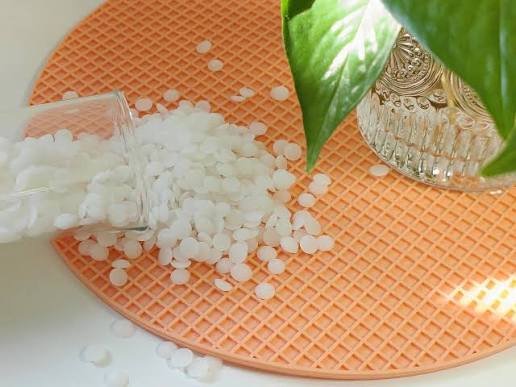
Silicone Powder is a specialized material derived from silicone-based compounds. It is commonly used as a functional additive in polymer formulations to modify processing behavior and improve the characteristics of finished products. Depending on its composition, particle size, and surface properties, it can provide different performance benefits.
One of its most valuable characteristics is its ability to reduce friction. When incorporated into suitable polymer systems, it can improve surface smoothness and help materials move more efficiently during manufacturing and everyday use.
Another important property is thermal stability. Silicone-based materials generally maintain useful performance across a broad temperature range, making them suitable for applications that require resistance to heat. Their chemical stability and water-repellent characteristics also contribute to their usefulness in demanding industrial environments.
Additionally, Silicone Powder can improve scratch resistance, abrasion performance, and surface appearance in selected formulations. These benefits make it a valuable option for manufacturers looking to enhance material functionality without significantly changing the overall manufacturing process.
Improving Polymer Processing Efficiency
Polymer processing involves several manufacturing techniques, including injection molding, extrusion, compression molding, and compounding. Each process requires careful control of material flow, temperature, pressure, and equipment conditions.
Adding Silicone Powder to compatible polymer formulations can help improve processing behavior. Its lubricating characteristics may reduce friction between polymer materials and processing equipment. This can support smoother material movement and help manufacturers achieve more consistent production results.
In extrusion processes, for example, controlling friction is important for maintaining stable material flow through the machine. Suitable silicone-based additives can help reduce processing resistance and improve the surface characteristics of extruded products.
In injection molding, improved flow behavior can contribute to more consistent filling of molds. Depending on the formulation, this may help reduce certain surface imperfections and support better product quality.
However, the appropriate additive concentration is essential. Excessive quantities may negatively affect mechanical properties, surface adhesion, or other formulation characteristics. Manufacturers should therefore evaluate processing conditions and conduct formulation testing before introducing new additives into large-scale production.
Enhancing Surface Quality and Appearance
Surface quality is an important consideration in many polymer applications. Products used in automotive interiors, consumer electronics, household equipment, and packaging often require smooth finishes and consistent visual appearance.
Silicone Powder can help improve surface properties by reducing friction and modifying the texture of finished polymer products. Depending on the material system, it may contribute to a smoother feel, improved scratch resistance, and better resistance to surface damage.
These characteristics are particularly useful in products that experience frequent handling or contact with other surfaces. For example, plastic components used in automotive interiors must maintain their appearance despite regular use, cleaning, and environmental exposure.
Manufacturers can also use silicone-based additives to achieve specific surface effects, including improved slip properties and reduced sticking. These improvements can make finished products more attractive while supporting their practical functionality.
Increasing Wear and Abrasion Resistance
Durability is another major factor influencing the performance of polymer materials. Plastic components used in industrial equipment, automotive systems, electrical products, and machinery may experience repeated friction and mechanical contact.
Over time, these conditions can cause scratches, surface deterioration, and material wear. Silicone Powder can help improve resistance to these effects when properly incorporated into compatible formulations.
Its lubricating properties can reduce friction between contacting surfaces, potentially limiting wear during repeated movement. This can be beneficial for components that require consistent performance throughout their service life.
In engineering plastics, improving wear resistance can support the development of durable components for demanding applications. Manufacturers should nevertheless consider the complete formulation because wear performance also depends on polymer type, reinforcement materials, operating temperature, and mechanical loading.
Applications Across Different Industries
Automotive Manufacturing
The automotive industry uses a wide range of polymer materials for interior and exterior components. Dashboards, door panels, protective covers, connectors, and other plastic parts require suitable surface quality and durability.
Silicone Powder can support the development of polymer formulations that offer improved scratch resistance, reduced friction, and better surface characteristics. These benefits are valuable in vehicle interiors, where appearance and long-term usability are important.
Electrical and Electronics
Electrical and electronic products often contain plastic housings, connectors, protective components, and molded parts. These applications may require dimensional stability, suitable surface properties, and resistance to environmental conditions.
Silicone-based additives can help improve selected material characteristics while supporting efficient manufacturing processes. Their suitability depends on the electrical, thermal, and mechanical requirements of the final application.
Plastics and Packaging
Plastic manufacturers use additives to improve processing efficiency and finished-product quality. Silicone Powder can be incorporated into suitable packaging films, molded containers, and other plastic products to modify friction and surface performance.
In packaging applications, improved slip properties can support material handling and production efficiency. Manufacturers must also verify that the additive meets the relevant food-contact and regulatory requirements whenever packaging is intended for direct food contact.
Rubber and Industrial Products
Rubber manufacturing also benefits from specialized additives that improve processing and product performance. Silicone Powder may be used in selected rubber formulations to influence lubrication, surface characteristics, and resistance to wear.
Potential applications include industrial seals, molded rubber components, protective materials, and other products requiring reliable performance.
Supporting Better Material Performance
One of the main advantages of Silicone Powder is its ability to provide multiple functional benefits within a suitable polymer formulation. Instead of relying on separate additives for every performance requirement, manufacturers may use silicone-based materials to address several processing and product characteristics simultaneously.
For example, reducing friction can improve material handling while also supporting better surface performance. Similarly, improved scratch and abrasion resistance can contribute to product durability.
These benefits can help manufacturers develop polymer products that meet increasingly demanding customer expectations. However, the effectiveness of the additive depends on factors such as particle distribution, compatibility, polymer chemistry, and processing conditions.
Proper dispersion is particularly important. Poor distribution can result in inconsistent material properties and unwanted defects. Using suitable mixing equipment and following recommended processing guidelines can help achieve more uniform results.
Important Factors When Selecting Silicone Powder
Choosing the right Silicone Powder requires evaluating several technical considerations. Manufacturers should first identify the intended application and the performance improvements they want to achieve.
Particle size is an important factor because it can influence dispersion, surface characteristics, and processing behavior. Smaller particles may provide different performance characteristics from larger particles, depending on the polymer system.
Compatibility is equally important. An additive must work effectively with the selected polymer without creating unwanted changes in mechanical strength, appearance, or adhesion.
Manufacturers should also consider thermal stability, recommended loading levels, processing temperatures, and the supplier’s technical documentation. Testing different concentrations through controlled trials can help determine the most effective formulation.
Working with a reliable supplier can provide access to product specifications, technical guidance, and application recommendations. This helps manufacturers make informed decisions and reduce formulation-related production challenges.
Sustainability and Manufacturing Efficiency
Sustainability has become an important priority across modern manufacturing industries. Businesses are increasingly looking for ways to reduce material waste, improve production efficiency, and extend the useful life of their products.
Silicone Powder can contribute to these objectives when it helps improve processing consistency, reduce certain surface defects, or enhance product durability. Better manufacturing efficiency may also reduce unnecessary material consumption and rejected products.
Longer-lasting polymer components can support more responsible resource utilization by reducing replacement frequency. Nevertheless, the environmental benefits depend on the complete material formulation, production process, product lifespan, and end-of-life management.
Manufacturers should evaluate these factors carefully rather than assuming that an additive automatically makes a product environmentally sustainable.
Conclusion
Silicone Powder is a versatile functional additive with practical applications across polymer processing, automotive manufacturing, electronics, packaging, rubber production, and industrial materials. Its ability to modify friction, improve surface characteristics, and support wear resistance makes it a valuable option for manufacturers seeking better material performance.
When selected and applied correctly, it can contribute to smoother processing operations, improved product consistency, and more durable finished components. Careful attention to compatibility, particle size, dispersion, and concentration is essential for achieving reliable results.
As manufacturing technologies continue to advance, the demand for specialized additives will remain important. By exploring the capabilities of Silicone Powder and incorporating it into carefully developed formulations, manufacturers can improve polymer processing strategies and create products that meet modern industrial performance requirements.