

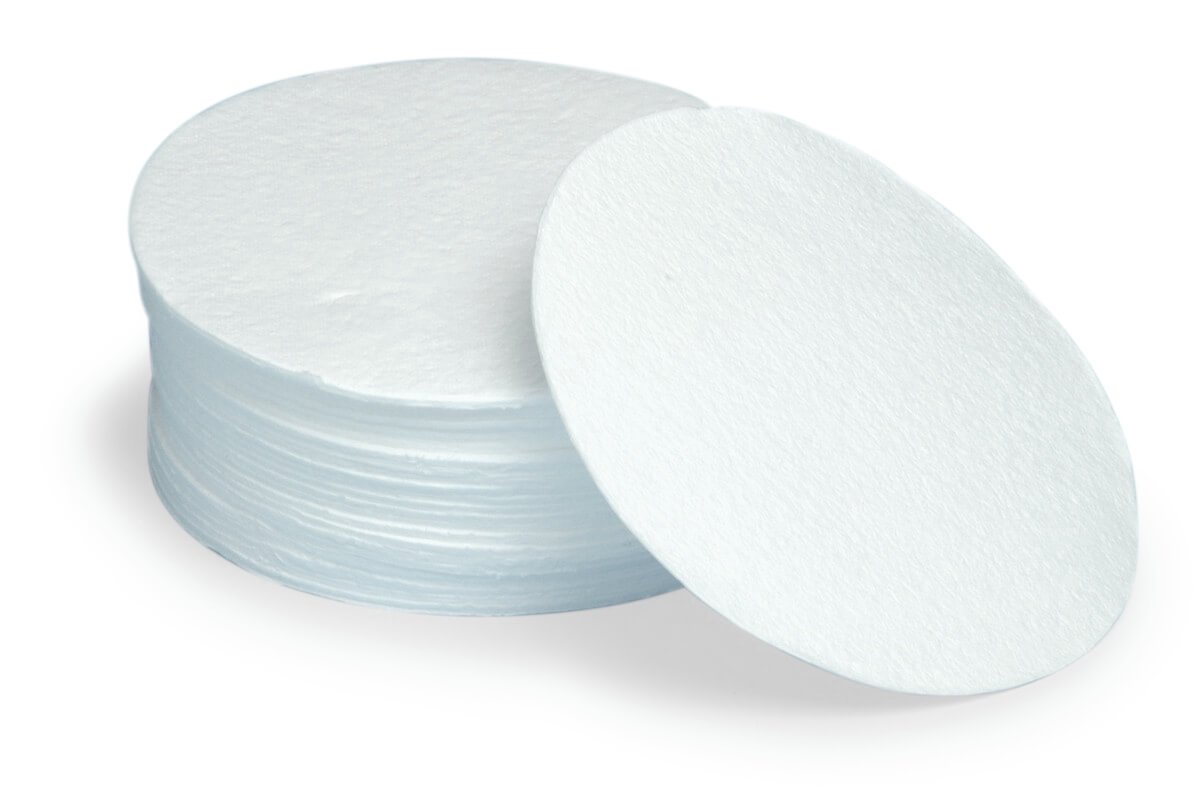
In modern industrial processing, environmental monitoring, and analytical chemistry, high-purity air and gas sampling are crucial for operational success and regulatory compliance. Among the various media available for high-performance separation, Quartz Filters have emerged as an indispensable component in advanced filtration systems. Designed to withstand extreme thermal environments, harsh chemical exposures, and demanding physical conditions, Quartz Filters provide precise performance where traditional cellulose or glass fiber media fail.
Understanding the structural characteristics, functional benefits, and varied applications of Quartz Filters demonstrates why these components are key to accurate monitoring and process optimization in modern industries.
Understanding Quartz Filters and Their Microstructure
Quartz Filters are crafted from high-purity micro-quartz fibers without binders or organic additives. Manufactured using pure quartz ($SiO_2$), these filter matrices exhibit exceptional thermal, physical, and chemical resistance.
Unlike standard glass fiber filters—which may contain trace metals, binders, or alkali components—Quartz Filters offer superior chemical purity. Their non-reactive fiber layout allows fluids, gases, or air samples to pass through while capturing microscopic particulates down to sub-micron sizes with extraordinary efficiency.
Fiber Matrix and Filtration Efficiency
The structural design of Quartz Filters creates a intricate, multi-layered mesh of ultra-fine quartz microfibers. This architecture allows them to operate primarily through depth filtration and inertial impaction. As air or gas flows through the fiber network, particulates are trapped across the entire thickness of the matrix rather than just on the outer surface.
This unique design offers several functional advantages:
- High Flow Rates: The porous arrangement ensures low flow resistance, maintaining high volume sampling rates.
- Superior Particle Retention: Sub-micron aerosols, soot, heavy metal particles, and ambient dust are captured efficiently.
- Low Background Artifacts: The lack of binders eliminates potential organic contamination, ensuring uncompromised analytical results.
Thermal and Chemical Superiority of Quartz Filters
The widespread adoption of Quartz Filters in advanced filtration systems stems directly from their ability to maintain structural integrity under extreme conditions.
High-Temperature Resistance
One of the defining features of Quartz Filters is their thermal tolerance. While standard paper filters deteriorate rapidly above $100^\circ\text{C}$ and standard glass fiber filters degrade around $500^\circ\text{C}$, high-purity Quartz Filters remain stable at temperatures exceeding $900^\circ\text{C}$ to $1000^\circ\text{C}$.
This extreme heat tolerance makes Quartz Filters the preferred standard for:
- Stack Gas Sampling: Monitoring emissions directly inside high-temperature chimneys and exhaust flues.
- Hot Gas Analysis: Industrial processes requiring particulate separation prior to gas phase analysis.
- Elemental Carbon Analysis: Thermal-optical testing methods where filters are baked at elevated temperatures to differentiate organic carbon from elemental carbon.
Chemical Inertness and Stability
In addition to thermal stability, Quartz Filters demonstrate high resistance to acidic and corrosive gases. In environments containing sulfur dioxide ($SO_2$), nitrogen oxides ($NO_x$), or acidic aerosols, lower-grade filter materials often react chemically with the gas, forming secondary compounds (such as sulfates or nitrates) directly on the filter. These chemical reactions create sampling artifacts, leading to false weight measurements and inaccurate chemical readings.
Because Quartz Filters are chemically inert, they do not react with ambient acidic gases, ensuring that the collected sample accurately reflects the actual particulates present in the fluid stream.
Key Applications Across Industries
Due to their reliability and accuracy, Quartz Filters are used across a wide range of analytical, industrial, and environmental disciplines.
1. Air Quality and Environmental Monitoring
Environmental protection agencies and research institutes rely on Quartz Filters for ambient air sampling. In monitoring Fine Particulate Matter ($PM_{2.5}$ and $PM_{10}$), these filters collect suspended particulates over extended periods. Their high purity allows researchers to perform accurate trace metal analysis (such as lead, cadmium, and arsenic) using atomic absorption spectroscopy (AAS) or inductively coupled plasma mass spectrometry (ICP-MS) without interference from background contaminants in the filter media.
2. Industrial Emission Testing and Stack Sampling
Factories, power plants, and chemical processing facilities must strictly monitor and report stack emissions. Heavy industrial flues release hot, moisture-laden, and acidic exhaust gas streams. Deploying Quartz Filters in stack sampling probes ensures precise measurement of soot, heavy metals, and particulate matter under real-world operating conditions without filter breakdown.
3. Carbon Analysis ($OC/EC$ Split)
In atmospheric research, distinguishing between Organic Carbon ($OC$) and Elemental Carbon ($EC$) is critical for evaluating climate impact and combustion sources. Thermal-optical carbon analyzers burn sample filters up to $870^\circ\text{C}$ in oxygen-rich and inert atmospheres. Quartz Filters provide the heat resistance and ultra-low carbon baseline required for this delicate analytical process.
4. High-Purity Industrial Fluid Processing
Beyond air and gas monitoring, specialized liquid filtration systems utilize Quartz Filters for high-purity chemical processing, pharmaceutical manufacturing, and semiconductor production. In these sectors, preventing elemental leaching and maintaining ultra-clean liquid streams is essential.
Comparative Advantages: Quartz Filters vs. Other Media
Choosing the right filtration media requires weighing performance metrics against operational demands. Comparing Quartz Filters with standard alternatives highlights their specialized value:
| Feature / Property | Cellulose Filters | Standard Glass Fiber | Quartz Filters |
| Maximum Operating Temp | $\approx 120^\circ\text{C}$ | $\approx 500^\circ\text{C}$ | $900^\circ\text{C} – 1000^\circ\text{C}$ |
| Chemical Inertness | Low (degrades easily) | Moderate (reacts with acid gases) | Exceptional |
| Trace Metal Purity | Low to Moderate | Moderate | Ultra-High |
| Acid Gas Reaction Artifacts | High | High ($SO_2/NO_x$ reaction) | Extremely Low / Negligible |
| Primary Use Cases | Routine liquid separation | General dust monitoring | High-temp, PM2.5, OC/EC & trace metals |
Selecting and Handling Quartz Filters for Optimal Performance
To achieve maximum precision in advanced filtration systems, proper handling and filter selection are essential:
- Pre-Baking Procedures: For ultra-trace organic carbon testing, pre-baking Quartz Filters at $600^\circ\text{C} – 800^\circ\text{C}$ before deployment removes any potential trace organic contaminants adsorbed during storage.
- Proper Conditioning: Humidity control and static charge elimination ensure precise gravimetric (weight-based) analysis before and after sampling.
- Careful Mounting: Because pure microfiber matrices lack synthetic binders, Quartz Filters should be mounted carefully in filter holders to prevent tears along edges while maintaining an airtight seal.
Conclusion
In modern analytical measurement and high-temperature gas processing, accuracy depends heavily on media quality. Quartz Filters offer a unique combination of thermal stability, chemical inertness, high purity, and efficient particle retention. By minimizing sampling artifacts and enduring extreme conditions, Quartz Filters remain a foundational tool for advanced filtration systems, enabling cleaner industrial operations, accurate environmental research, and reliable compliance monitoring worldwide.